
Give your team a way to think through the decisions that matter.
Every week, care service managers face judgement calls where the right answer is not obvious. Ethical Edge gives you and your team practical skills to think them through, talk about them openly and act with confidence.
Free to download. No commitment required.

Most hard decisions in care have no obvious answer.

A resident's wishes pull against their safety. A colleague's concern does not fit the rota. A family asks for something you cannot give. Policies help, but they cannot tell you what to do when two good options pull in different directions.
Ethics is not another set of rules. It is a way of thinking that helps you weigh what matters, reach a decision more quickly and explain it with confidence.
Do I do what the policy says, or what is right for this person?
Start small. Build as far as you need to.
Expert Facilitated Team Talk
A 60 minute in-person workshop led by an expert, delivered as part of your weekly team meeting.
CPD accredited2 Day Course
Taught content for your leaders, managers and supervisors, building shared skills and a common language.
6 Month Programme
Ethical decision making built into daily practice over six months, so it sticks.
CPD accreditedMembership
Everyone who completes the 2 Day Course becomes an Associate Member, with a monthly bulletin, resources and live webinars.
Ethics as a practical skill.
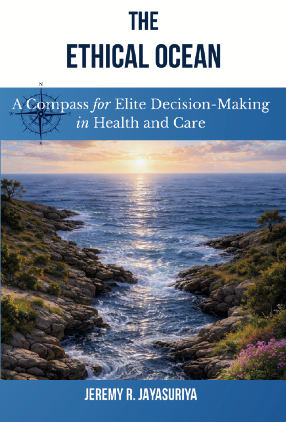
Ethical Edge grew out of The Ethical Ocean, a book on ethical leadership and decision making for health and social care professionals. Our programmes turn that thinking into skills your team can use on shift.
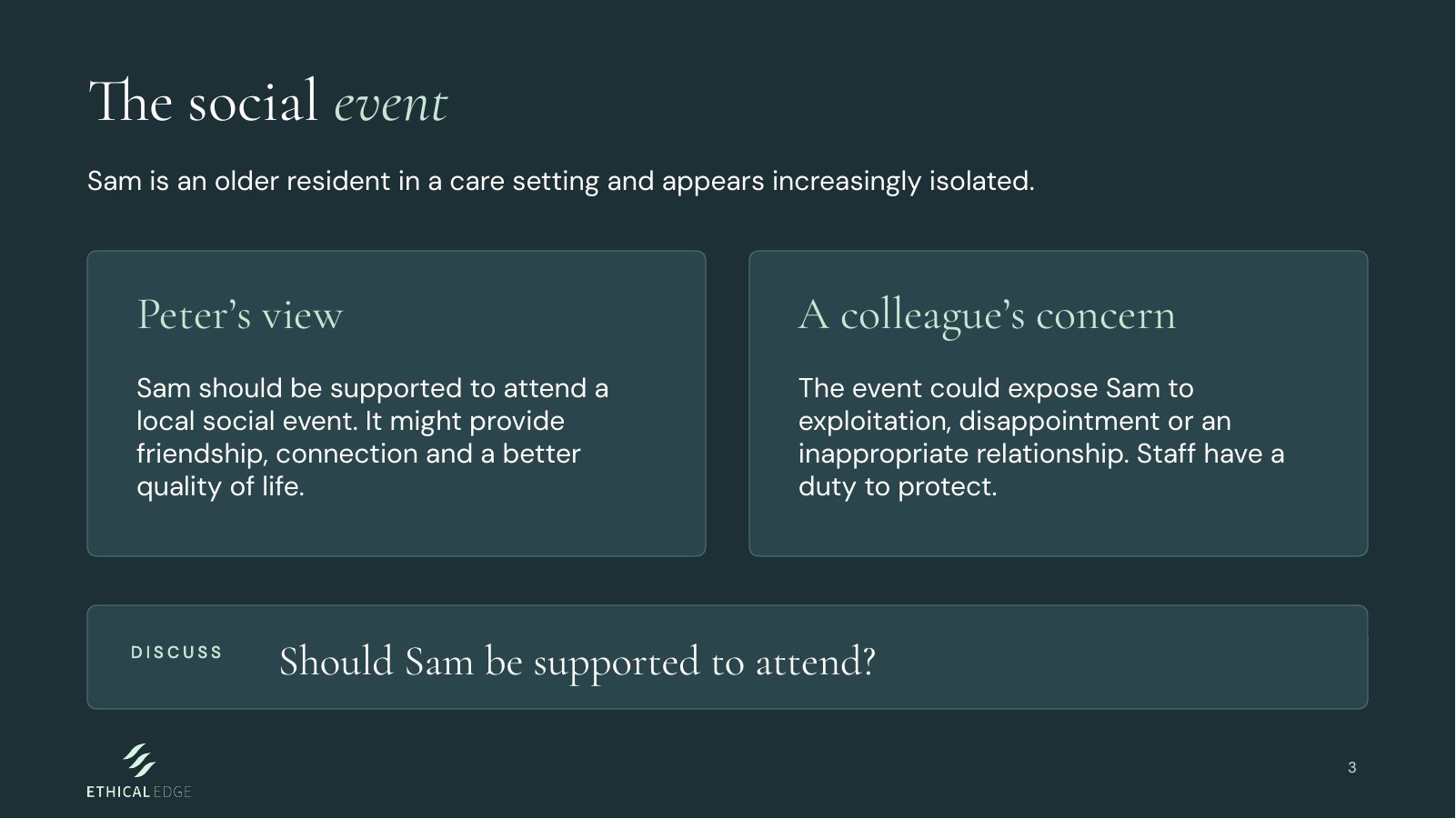
Run an ethics session in your next team meeting.
A ready-to-use pack for team managers. Nothing to prepare from scratch.
Free to download. No commitment required.
Prefer to talk it through?
Book a short call and we will help you decide where to start for your service.
No obligation, no pressure.